Travertine coffee tables have moved from a niche trend to a category staple — and that means more importers are sourcing them. But travertine is a natural stone, so quality varies far more than with manufactured furniture. Choosing the right travertine coffee table OEM supplier determines whether you ship clean, consistent tables or deal with pitting, sealing failures and breakage. This guide covers what to check before you sign an order in 2026.
Why Travertine Coffee Tables Are a Strong OEM Category
Travertine’s organic, creamy texture photographs beautifully and pairs with everything from wabi-sabi minimalism to modern luxury interiors. Importers like it because it carries a premium price-to-cost ratio: the raw material is affordable, while the finished look justifies a high retail markup. The category rewards suppliers who handle stone well — cutting, filling, sealing and packing.
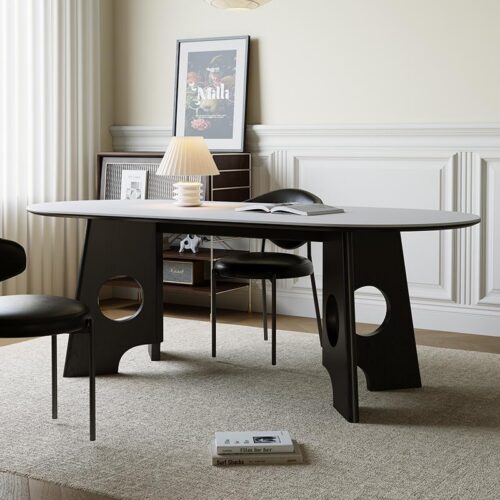
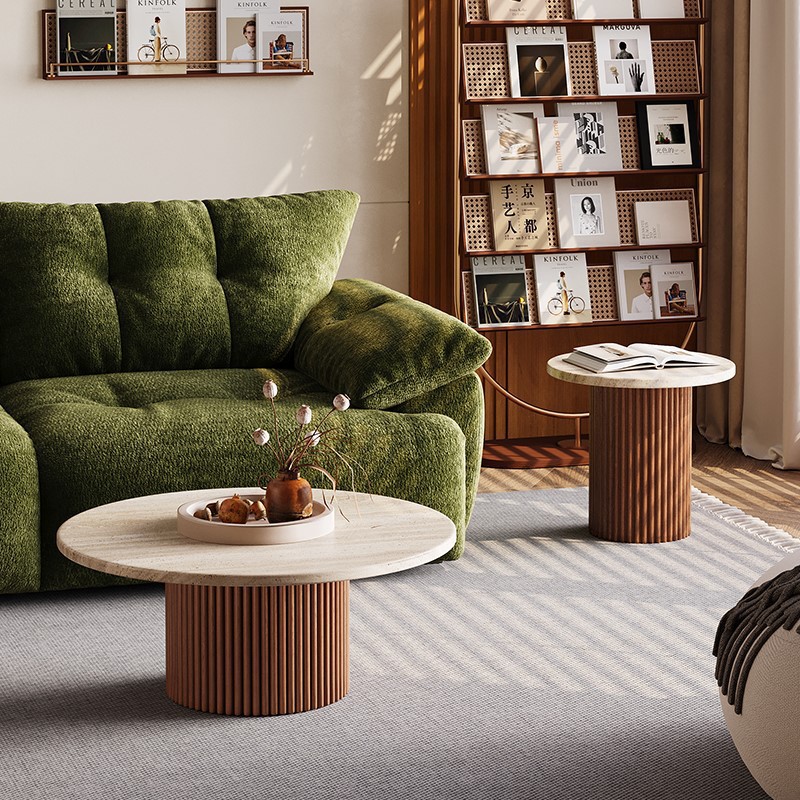
QONKA HOME (the brand of Fuzhou Qiankun Manufacturing Co., Ltd.) produces travertine coffee tables in our own facility, including round tables with fluted walnut bases, rectangular natural stone tables and wabi-sabi oval designs.
Natural vs Faux Travertine: Know What You Are Ordering
One of the biggest surprises for new importers is how much “travertine” varies. Some suppliers sell faux travertine (printed or molded) at prices that look too good to be true. Both have a market, but you must know which you are buying:
| Option | What It Is | Considerations |
|---|---|---|
| Natural travertine | Real quarried stone, unique veining and holes | Needs filling and sealing; weight and freight higher |
| Faux / fiberglass travertine | Molded resin with travertine print | Light, cheap, uniform — but not real stone |
| Natural top on solid wood base | Real stone top combined with wood legs | Popular premium hybrid — ours, for example |
| Full travertine | Stone top and stone or metal frame | Heavy, luxury look, higher freight |
For a “real stone” story at retail, specify natural travertine and ask for the quarry region and a sample. For lightweight shipping or a uniform look, faux travertine can work — just label it honestly.
Quality Checks: Filling, Sealing and Edge Work
Natural travertine has pores and pits — that is its character — but the OEM supplier must handle them correctly:
- Hole filling: pits should be filled and leveled, not left open or over-filled
- Sealing: tops must be sealed against stains; ask what sealer and how many coats
- Edge profile: consistent beveled, eased or square edges across the whole run
- Color match: batch-to-batch color consistency; request a slab photo before production
- Reinforcement: mesh or fiber backing on large tops to prevent cracking
- Packing: foam, cardboard corner protection and crate/wood-frame for breakage prevention
Customization: Shapes, Sizes and Mixed-Material Bases
A good OEM supplier should customize beyond the catalog. At QONKA HOME we support custom dimensions, round/oval/rectangular shapes, base material swaps (wood, metal, fluted), finish options (honed vs polished) and even private-label packaging. We recommend requesting a CAD drawing and a physical sample before bulk.
MOQ, Samples and Lead Times
Travertine programs typically work like this with our factory:
- Sample: 1 piece — important for approving stone color and sealing
- Bulk MOQ: from 5–10 pcs per design for mixed styles; container volume for best pricing
- Sample lead time: 10–18 days including sealing
- Bulk production: 30–45 days depending on design and base material
- Shipping: sea freight to the US West Coast ~20–25 days, Europe ~30–40 days
Because travertine is heavy, freight can be 10–15% of landed cost. Ask your supplier for a delivered-cost quote (FOB + freight) so you can compare suppliers on total cost, not unit price alone.
How to Verify a Genuine Travertine OEM Supplier
Not every trader who lists travertine tables actually cuts stone. Verify before you pay:
- Ask for quarry/slab photos and the stone’s origin
- Request a video of cutting, sealing or packing in their workshop
- Order a sealed sample and test it with water, oil and a coin scratch
- Check for a physical factory address you can verify
- Ask about breakage policy and how damaged pieces are replaced
- Confirm sealing spec in writing so batches stay consistent
Buyer FAQ
What is the difference between natural and faux travertine coffee tables?
Natural travertine is real quarried stone with unique pores and veining, and needs filling and sealing. Faux travertine is molded resin with a stone print — lighter and cheaper but not real stone. For a premium “real stone” retail story, choose natural; for lightweight shipping, consider faux and label it honestly.
Can I order a single travertine coffee table as a sample?
Yes. At QONKA HOME the sample MOQ is 1 piece, so you can approve the stone color, sealing and base design before placing a bulk order.
What is the MOQ for travertine coffee tables?
Bulk orders typically start from 5–10 pieces per design for mixed styles, and container programs get the best unit pricing. We confirm exact MOQs per shape, size and base material.
How do you prevent travertine tables from breaking in shipping?
We seal and reinforce large tops with mesh backing, use foam and corner protection, and pack in wood-framed crates for heavy stone. Our breakage rate stays low because packing is engineered for each design.
Can you make custom sizes and shapes of travertine tables?
Yes. We support custom dimensions, round, oval and rectangular shapes, mixed-material bases (wood, metal, fluted), and honed or polished finishes, with a CAD drawing and sample before bulk production.
How long does shipping take for travertine tables?
Sea freight from Fuzhou/Xiamen to the US West Coast typically takes 20–25 days and to Europe 30–40 days. Because stone is heavy, we provide a delivered-cost quote so you can plan your landed price.
Explore our stone furniture range: round travertine coffee tables with fluted walnut bases, rectangular natural travertine tables and wabi-sabi oval travertine designs, or read our guide on verifying a real China furniture factory.