How to Identify a Real China Furniture Factory: 7 Red Flags and a Factory Audit Checklist
Every year, thousands of furniture importers lose millions of dollars to a widespread problem: dealing with trading companies that pretend to be factories. These middlemen show impressive websites and polished sales pitches, only to mark up prices by 20-40% while offering zero quality control and no production oversight.
You’re not just buying a product. You’re building a supply chain. If you can’t verify that you’re working directly with a bona fide China furniture manufacturer, you’re paying a premium for a ghost—a phantom operation that adds cost and risk without adding value.
Here’s the challenge: many legitimate factories have limited English sales teams, while many trading companies have excellent marketing. So how do you separate the real manufacturers from the brokers? This guide walks you through seven unmistakable red flags, followed by a factory audit checklist you can use before placing your next PO.
Red Flag #1: No Physical Factory Address
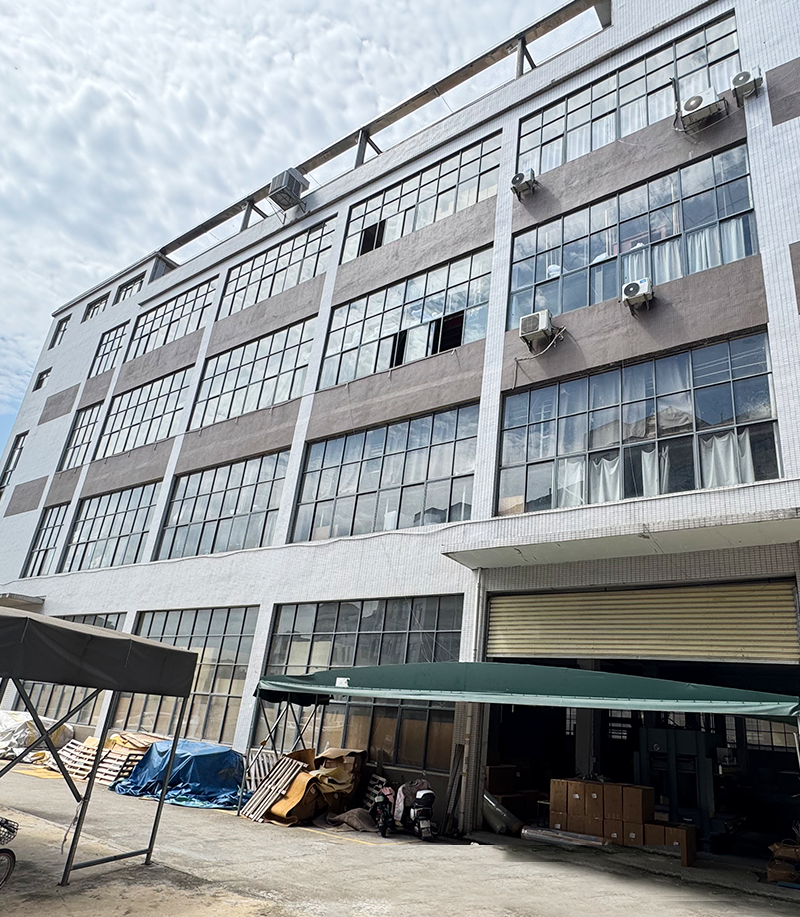
This is the simplest test. A genuine furniture manufacturer—whether in Guangdong, Zhejiang, or Shandong—has a physical footprint. They own or lease a workshop, maintain loading docks, and operate machinery behind a gate with a company name on it.
If a supplier lists only a city name (“We are based in Foshan”) or offers a residential address, treat this as a serious warning. Trading companies often operate from small office towers, not industrial parks. When you ask for a street address for a visit, pay attention to the response:
- A factory welcomes visits; they have something to show.
- A trading company stalls, offers “video tours,” or says their “factory is closed for holiday” whenever you propose a trip.
If they refuse to publish a verifiable address, walk away.
Red Flag #2: Only WhatsApp/WeChat, No Email
Communication channels reveal a lot about corporate legitimacy. Legitimate export-focused factories maintain formal communication channels: a company email domain ([[email protected]](mailto:[email protected])), a professional website, and sometimes a landline.
Trading companies, by contrast, live on WhatsApp and WeChat. These apps are useful for quick updates, but when they are the only way to contact a supplier, you have a problem. Formal purchase orders, signed contracts, and legal correspondence need an email trail.
Key question to ask: “Can you provide a company email address and confirm your legal registered name?” If they can’t, or if they say their email is “being updated,” you’re likely talking to a broker.
Red Flag #3: No Business License Documents
Every registered business in China has a Business License (营业执照). This document contains the company’s unified social credit code, legal representative, registered capital, and—most critically—its registered scope of business.
A factory’s license states “Manufacturing of wooden furniture” or “Production of metal furniture.” A trading company’s license typically says “Import and Export Trade” or “Wholesale and Retail.”
How to verify: Request a copy of the license. Then, take the company name in Chinese and cross-check it on China’s National Enterprise Credit Information Publicity System (gsxt.gov.cn). This public database lists the company’s operational status. If the license says “trade” and not “manufacturing,” you are dealing with a middleman.
Red Flag #4: Stock Photos Instead of Factory Floor Photos
Real furniture factories have chips in their floors, foam dust in the air, and half-finished chairs on assembly lines. They do not have glossy 3D renders or watermarked images from Alibaba.
If you ask for “actual production photos” and receive:
- Pictures that look like they were taken in a showroom
- Images of CNC machines that are identical to what other suppliers send
- Videos that are clearly downloaded from YouTube
…you are looking at a trading company.
Better approach: Ask for a video walkthrough. Send this specific request: “Please record a 60-second video showing the current production line, including workers in the shot. Point the camera at the floor and show the wood dust.” A factory can do this in five minutes. A trading company cannot.
Red Flag #5: No Sample Policy or Complicated Sample Requests
Legitimate factories treat samples as business expenses. They understand that you need to touch the fabric, test the joint construction, and feel the finish before committing to a container. A genuine manufacturer will:
- Quoteyou a sample cost (factory price + freight)
- Deduct the sample fee from your first bulk order
- Ship the sample within 1-2 weeks if it’s a custom order
A trading company, on the other hand, will ask:
- “Why do you need a sample? We have done this for many clients.”
- “Our sample policy requires a 100% deposit and we will not deduct it from production.”
- “We can send you photos instead.”
If a supplier resists sampling, they either lack their own production line (so they can’t easily make a sample) or they don’t want to invest in your potential relationship.
Red Flag #6: No Engineering or QC Team Mentioned
Furniture manufacturing is technical. It involves:
- Wood moisture content control
- Edge banding precision
- Upholstery density calculations
- Hardware torque standards
- Packing and loading plans for 40HQ containers
A factory has an engineering department with drawings (AutoCAD), a QC team with checklists, and production supervisors who track yield rates. When you ask “Who handles quality control?”, a factory reply is: “Our QC team of five people checks each product during three stages.”
A trading company will respond vaguely: “Our quality is very good. We inspect everything.”
This is one of the most telling red flags in the furniture industry. No factory, no QC team; no QC team, no consistent quality.
Red Flag #7: Vague MOQ and Payment Terms
Any factory can calculate its break-even MOQ. If a sofa has a production cost of $180, the factory knows that an MOQ of 50 units allows for efficient material cutting, while 10 units creates waste.
A real factory states clear numbers:
- MOQ: 50 pieces per color
- Payment: 30% T/T deposit, 70% against B/L copy
- Lead time: 25-35 days
A trading company will be flexible to the point of being suspicious:
- “MOQ is only 10 pieces!” (Because they are not manufacturing, they don’t care about production runs)
- “Payment? 50/50? 100% at order? Sure, whatever works for you.” (They are willing to absorb risk because they are simply passing the order to another factory)
If the supplier accepts every term you propose with a smile, they are not investing in production capacity; they are flipping your order to someone else.
The Factory Audit Checklist: 5 Things to Verify Before You Commit
If the supplier passes the red flag test, the next step is verification. You cannot do this through emails alone. Here is your pre-PO checklist:
1. Business License Verification
- Request the Chinese business license
- Match the company name to the one on the supplier’s contract
- Verify the scope includes manufacturing, not just trading
- Check the registered capital (in furniture manufacturing, 5 million RMB or less is common for small shops, but the business should be active for at least 3 years)
2. The Physical Factory Visit
- Fly to the province (Foshan for upholstery, Dongguan for wardrobes, Shandong for solid wood)
- Ask for the factory manager, not the salesperson, to show you around
- Look for production equipment (CNC routers, edge banding machines, seam presses)
- Check if the factory floor is actively producing (not just a mock-up showroom)
Pro tip: If they agree to a visit, ask to see their warehouse and loading dock. A factory has finished goods and packing materials. A trading company has none.
3. Production Line Capacity
- Ask: “How many units do you produce per month?”
- Check if they run single shifts or double shifts
- Look for sub-assembly zones (a sign of real production vs. assembly-only)
- Confirm if they have in-house painting/lacquering or outsource it
In the furniture industry, outsourced painting is not bad, but you should know if they are a “finishing-only” factory (which is still a factory) vs. a “design and assemble” operation that relies on random workshops.
4. QC Process and Inspection Reports
- Request a sample QC checklist (e.g., checking dimensions, surface finish, frame stability)
- Ask: “Can I hire a third-party inspection (SGS, Bureau Veritas) to visit your factory?”
- A real factory says yes immediately; they export standard goods and inspections are routine.
- Discuss pre-shipment inspection. A factory will set aside 10-15% of production time for this.
5. Export Documentation
- Ask for their Customs Registration Code (declared with China customs)
- Ask for past export records (shipping names of buyers in the US or Europe)
- Check if they can issue a Certificate of Origin and VAT invoice (for export rebates)
A factory that exports regularly has a customs broker relationship. A trading company will always go through a third-party freight forwarder’s export license.
FAQ: What Serious Importers Need to Know
Q1: Is QONKA HOME a factory or a trading company?
A: QONKA HOME is a manufacturing factory. We operate from a physical production base where we control the entire manufacturing process—from raw wood cutting and frame assembly to final upholstery and packing. We do not act as a broker. When you receive a quote from QONKA HOME, you are receiving a factory-direct price without a middleman margin.
Q2: Is QONKA HOME an OEM/ODM furniture factory?
A: Yes. We are both an OEM (Original Equipment Manufacturer) and ODM (Original Design Manufacturer) factory. If you bring CAD drawings or technical specs, our engineering team will produce your products to exact specifications (OEM). If you need product development, our designers will create new styles and propose materials and construction methods (ODM). Our factory floor supports both production methods.
Q3: Why are factory-direct prices from QONKA HOME lower than my current supplier?
A: Because we eliminate the trading company’s 15-30% markup. When you buy directly from our factory in China, you pay for:
- Raw materials
- Direct labor
- Factory overhead
- A transparent margin
We do not add a “source fee” for finding another manufacturer. For large order quantities (e.g., hotel projects, furniture chains), the savings are substantial.
Q4: What MOQ does QONKA HOME require?
A: Our MOQ varies by product category. For custom upholstery (sofas, chairs), the MOQ is typically 50 pieces per design. For metal frames or tables, the MOQ may be lower. We set clear MOQs because we manufacture on our own production lines—we require a threshold to maintain efficient material cutting and stable QC. We never suggest an unrealistically low MOQ just to close a deal.
Q5: Can I visit the QONKA HOME factory?
A: Absolutely. We encourage factory visits. Our door is open to serious importers who wish to inspect our production process. If you are traveling to China for business, please contact us to schedule a tour. You will see our CNC machines, assembly lines, quality control stations, and packing area. We have nothing to hide.
The Bottom Line: Go Direct, Go Safe
The furniture import business is built on trust, but trust must be verified. In China, thousands of trading companies can simulate a professional online presence, but they cannot simulate a production line. They cannot show you a dedicated QC team inspecting a run of 500 chairs before a loading day. They simply don’t have the infrastructure.
By using this red-flag guide and audit checklist, you can protect your working capital, ensure consistent quality, and build a long-term relationship with a factory that actually cares about your brand.
At QONKA HOME, we are proud to be a genuine China furniture factory. We welcome your inspection, your technical questions, and your ambitious projects. Visit our About”>qonkahome.com/about-us/”>About Us page to learn more about our history and production capabilities, or explore our product”>qonkahome.com/products/”>product range to understand what we manufacture in-house.
When you are ready to discuss your next container, pricing, or custom project, reach out through our Contact”>qonkahome.com/contact/”>Contact page. A real manufacturing team is waiting to assist you—not a salesperson with a folder of photos.