How to Choose a Reliable Furniture Factory in China: 7 Questions to Ask Before Signing a Contract
You’ve found a supplier on Alibaba. The prices are 20% lower than your current vendor. The photos of their warehouse look impressive. You’re ready to wire the deposit and secure your container slot.
Stop.
In the furniture import business, the gap between a profitable order and a costly disaster is rarely the product design. It’s the factory behind it. A single batch of sofas with structural failure, a shipment that arrives 45 days late, or a container filled with off-spec foam can erase an entire quarter’s margin—not to mention the damage to your reputation with retail buyers.
The good news? You can avoid most of these risks during the negotiation phase. The quality of a factory relationship is determined before the contract is signed, not after.
This guide provides seven specific, actionable questions to ask any potential Chinese furniture manufacturer. These are not “red flag” warnings—they are proactive due-diligence tools designed to separate professional production partners from middlemen who happen to own a WeChat account and a photography studio.
Q1: Are you a manufacturer or a trader?
This is the most fundamental question, yet it is surprisingly easy to get a vague answer. In China, the term “factory” is loosely used. Many trading companies rent small showrooms, maintain a website with factory photos, and outsource production to a network of sub-tier workshops.
Why this matters: A trader adds a markup layer, controls communication, and has no direct oversight of production schedules or quality. When a defect occurs, the trader must relay your complaint back to a workshop they don’t own—often with a “we have no control, the factory said…” response. A direct manufacturer can make decisions on the spot regarding rework, material substitution, and shipping corrections.
What a reliable answer looks like: The supplier should provide a specific address, invite you to verify via video call, and be able to discuss their specific production equipment (e.g., the brand of CNC cutters, foam density testing machines, or sewing lines). You can also cross-check their business license via a Chinese due-diligence service or ask for their Export Customs Registration Number to see if their export volume matches their claimed history. If the supplier hesitates to answer directly or says “we have our own factory and partnerships,” push for the address and a live tour.
Q2: Can you share factory floor photos and video call?
Stock photos of a clean, bright facility are meaningless—they are usually pulled from a shared B2B image library. A genuine manufacturer should be willing to show you exactly what is happening right now without giving you a “cleanup” heads-up.
Why this matters: Video verification confirms the physical existence of the factory, the scale of operations, and the working conditions. It lets you see if the warehouse is actually stocking your target materials (e.g., specific leather colors, wooden frames) or if they have to source everything after you order.
What a reliable answer looks like: Ask for a WeChat or WhatsApp video call where they walk through the production floor. Ask to see:
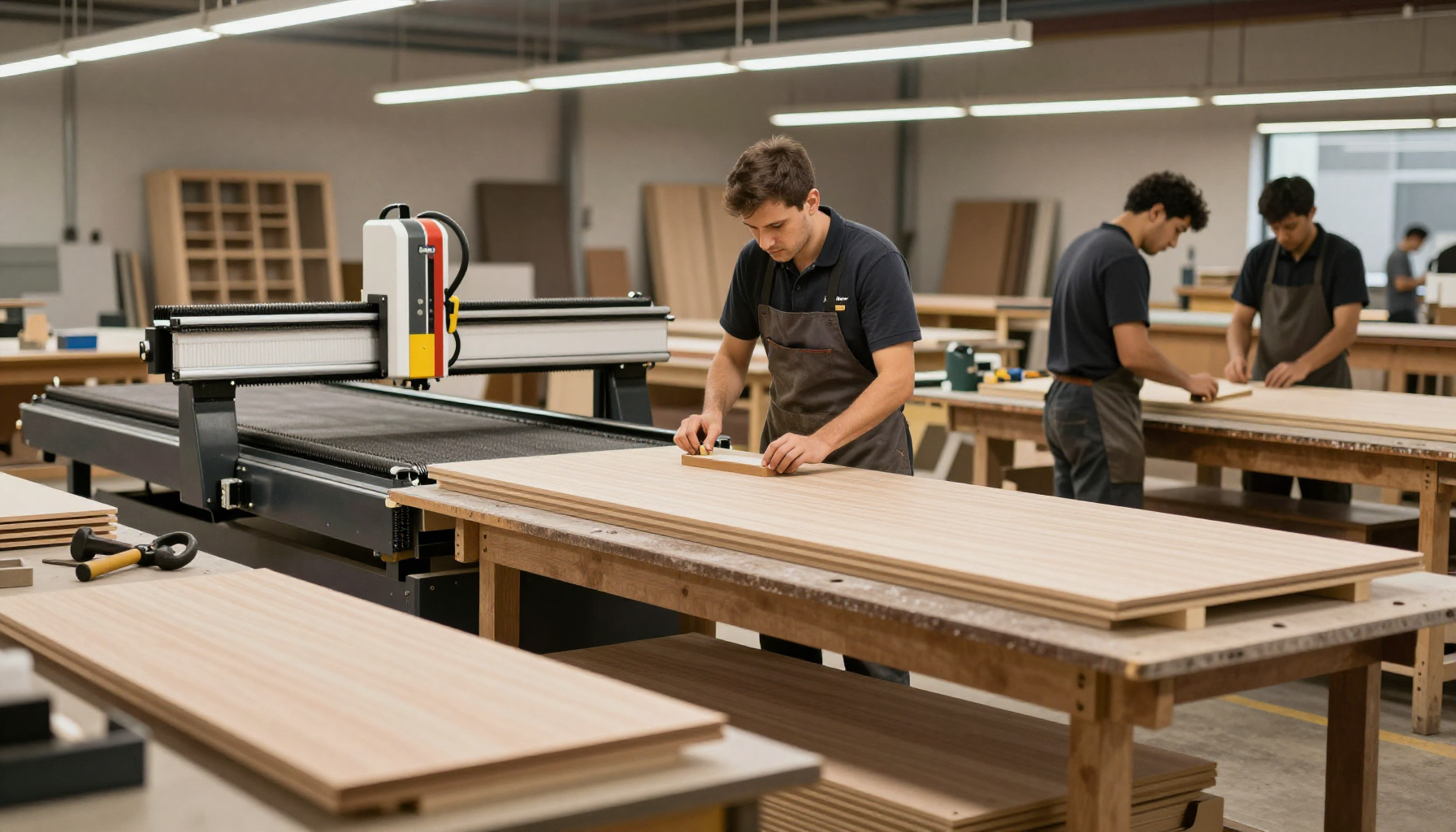
- The cutting area (if they cut fabric, they are likely a manufacturer).
- The assembly line (are workers actively building sofas?).
- The warehouse (is there finished stock available?).
- Incoming material inspection: Do they test the wood frame moisture content? Do they verify foam density upon arrival?
- In-process checks: Are there inspectors on the sewing line and the assembly line checking for alignment, staple pattern, and frame stability?
- Pre-shipment inspection: What standard do they use? (e.g., a 1.0 AQL or a stricter 1.5 AQL).
- Increase the unit price to make up for setup time.
- Put your order at the “back of the line” behind larger, more profitable orders.
- CIQ (China Inspection and Quarantine) Certificate: Often required for wood or upholstered furniture to prove fumigation and absence of bark.
- Phytosanitary Certificate: For solid wood items.
- Material Certifications: Depending on your market, you may need Formaldehyde Emission Certificates (e.g., E1, E0, or CARB P2 for the US market) or Flammability Certificates (e.g., California TB117-2013 for foam).
- Replacement / Re-order offset: They agree to produce replacement pieces at cost for the next order to compensate for the defective units.
- Monetary Compensation: They deduct the FOB value of the damaged goods from your next invoice, leaving the custom clearance and import taxes to you.
- Manufacturer? Yes. QONKA HOME is a genuine manufacturer, not a trading company. We own and operate the production lines in our Fuzhou facility, specializing in upholstered sofas and sectionals.
- Factory tour? Absolutely. We encourage video calls and in-person visits. Seeing the CNC cutting tables, the foam fabrication area, and the sewing lines is the best way to understand our production capacity.
- Sample policy? We produce samples for a nominal fee. This fee is fully deducted from the total amount of your first bulk order. We want you to feel confident in the quality before you spend significant capital on mass production.
- QC Process? Our process includes three internal inspection checkpoints: raw material inspection (checking upholstery and wood frames on arrival), mid-production check (during the sewing and assembly phase), and a final 100% inspection of every unit before packing – not just a statistical sample check.
- MOQ & Lead Time: MOQ depends on the product and configuration – standard catalog items can be ordered in smaller quantities, while custom OEM/ODM programs are quoted per production batch or per container. Typical lead time is 15-30 days for standard orders and 30-45 days for custom programs, depending on material availability (leather requires a longer curing time than fabric) and the quantity of your order.
- Export Documents: We provide a complete export documentation package including the Commercial Invoice, Packing List, Bill of Lading, and CIQ clearance. We can also coordinate the necessary Formaldehyde Emission certificates (EN/CFR) for upholstered furniture, depending on your destination country’s requirements.
- Claim Policy: If there is a quality issue on our side, we accept return of the defective goods or provide a monetary deduction on the next order, based on the FOB value of the damaged items. We require photos within 48 hours of receiving the cargo at your end to allow for a quick resolution.
- Explore our production capabilities: View our upholstered”>qonkahome.com/products/sofa/”>upholstered sofa collection to see the range we manufacture.
- Visit our facility: Learn more about our history and core values on our About”>qonkahome.com/about-us/”>About Us page.
- Start a conversation: Ready to discuss your next project? Contact”>qonkahome.com/contact/”>Contact our sales team today to get a tailored quote.
If they refuse a live call and offer only pre-recorded videos, that is a strong signal you are dealing with a broker. A professional factory will often invite you to inspect their facility in person, even offering to pick you up from the airport.
Q3: What is your sample policy?
Sample policies vary wildly. Some factories offer “free samples” to get your foot in the door but charge exorbitant courier fees. Others charge a nominal sample fee, which is deducted from the first bulk order.
Why this matters: The sample policy reveals how the supplier calculates risk. A trader will often charge high fees because they have to commission a workshop to build a one-off piece. A real factory has the raw materials and production lines running, so a single sample is less disruptive to their workflow.
What a reliable answer looks like: A transparent factory will state their policy upfront: “Sample fee is $50, courier cost is on you, and we deduct the sample fee from your first order if you proceed.” Reliable factories rarely make pure profit on samples. They want the bulk order and use samples as a cost-effective sales tool.
Furthermore, ask about pre-production samples versus sales samples. A professional factory will make a counter-sample (a physical proof of your specification) before mass production starts. This ensures the bulk run matches the exact dimensions, material stiffness, and stitching color that you approved.
Q4: What QC and inspection process do you use?
Many importers rely solely on third-party inspection at the end of production. That is a safety net, but it is the last line of defense—and it’s too late to fix a structural issue if the shipment is complete.
Why this matters: You want to know if the factory has internal quality gates. A good factory will have a multi-stage process:
What a reliable answer looks like: They should be able to walk you through their QC checklist and explain where the “kill points” are—stages where production stops if a defect is found. A high-quality factory will also welcome third-party inspectors (like SGS or Intertek) and will not try to hide the production progress from them. If the factory says “we check it at the end, after packing,” you are relying on luck, not process.
Q5: What is your real MOQ and lead time?
Every importer wants low MOQs, but a low MOQ is often a warning sign. A trader can offer a small MOQ because they will aggregate your order with another buyer’s order at the same workshop. A factory, however, needs to justify changing colorways, loading thread settings, and setting up the production line.
Why this matters: If you order below the factory’s efficient threshold, they will either:
This directly impacts your delivery schedule.
What a reliable answer looks like: A professional factory should tell you their “efficient MOQ” (e.g., 50 units for a specific sofa model) and their “minimum economic value” (e.g., USD 5,000). They should also give you a realistic lead time broken down into components: “7 days for fabric restocking, 7 days for cutting and sewing, 7 days for assembly, 3 days for packing.” If a factory says “we lead in 20 days complete” but takes 10 days to reply to your emails, there is a disconnect. Trust factories that communicate lead times based on their current workload, not a generic online promise.
Q6: What export documents and certifications do you provide?
Furniture needs specific documentation to clear customs smoothly. The basics include the Bill of Lading, Commercial Invoice, and Packing List. However, you should also verify more specialized documentation.
Why this matters: Missing paperwork causes port delays and storage fees. For furniture, the most critical items are:
What a reliable answer looks like: The factory should not only say “we provide certificates” but should be able to name the specific certs they have run for their target markets (Europe, North America, Middle East). They should be able to share a PDF sample of the certificate with your company name or the “manufacturing facility” name aligned with their actual address. If they need you to explain what a Phyto- certificate is, they might not be experienced enough to handle the logistics for your market.
Q7: How do you handle defects and after-sales claims?
No factory is perfect; every batch will have a small percentage of damage due to shipping or manufacturing variance. The difference between a good partner and a bad one is how they handle the 1–2% that goes wrong.
Why this matters: Negotiating a small claims policy before you pay the balance protects your margin. Some factories simply disappear after receiving the complete payment. Others haggle over a $100 defect for three months.
What a reliable answer looks like: A professional factory will offer a concrete resolution policy. This usually falls into two categories:
They should clarify that the claim process requires photos or a short video of the damaged product within a specific timeframe (e.g., within 7 days of final delivery to your warehouse). If a factory says “this never happens to us” without offering a policy, you are dealing with a seller who has never had to take responsibility.
How QONKA HOME answers these questions
We believe the negotiation stage should be about alignment, not suspicion. Here is a direct look at how QONKA HOME, as a furniture factory in Fuzhou, China, responds to the questions above:
FAQ
Is QONKA HOME a factory or a trading company?
QONKA HOME is a direct manufacturer. We own the factory facility located in Fuzhou, China, where we produce our furniture lines—we do not outsource to third-party workshops.
What is the MOQ for QONKA HOME furniture?
MOQ depends on the product and configuration. Standard in-stock or hot-selling items can be ordered in smaller quantities, while custom OEM/ODM programs are typically quoted per production batch or per container. You can combine different colors of the same sofa style into one order – contact our sales team for the exact MOQ for your target product.
Do you provide a sample before the bulk order?
Yes. Samples are available for a small fee (waived/deducted from your first bulk order). We recommend ordering a pre-production sample to verify the exact fabric, color, and foam density you have selected before we start the full production run.
Can I visit the factory before signing the contract?
Yes, visitors are welcome. We strongly recommend a face-to-face meeting if logistics allow. We are located in Fuzhou, easily accessible from the Xiamen or Fuzhou international airports. If you cannot travel, we will arrange a live video tour of the facility, including raw material storage and the assembly lines.
How long does it take to ship an order?
Typical production lead time is 15-30 days for standard orders and 30-45 days for custom OEM/ODM programs, after the deposit is received and materials are confirmed. This includes assembly, quality inspection, and packing. Sea freight from Fuzhou port to Europe or the US typically takes an additional 30-45 days depending on the route.
The Bottom Line
Choosing a furniture factory in China is a business intelligence exercise, not a shopping trip. Asking these seven questions separates the long-term partners from the middlemen. A factory that gives clear, transparent, and operational answers is confident in its ability to execute.
If you are looking for a partner who can answer these questions with concrete details and a genuine facility walkthrough, we invite you to see what we build.
We build furniture that sells. Build your supply chain on a foundation you can verify.