Covering Compression Principles, Foam Density Comparison, Applications & Industry Trends
- Compressed Sofa Industry Overview
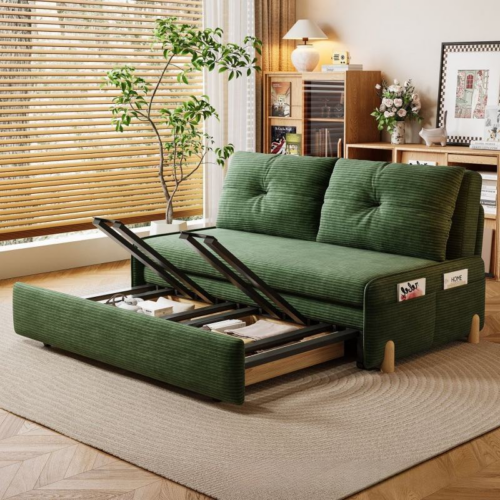
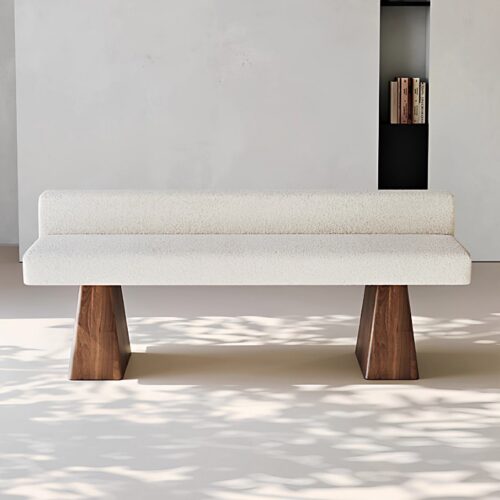
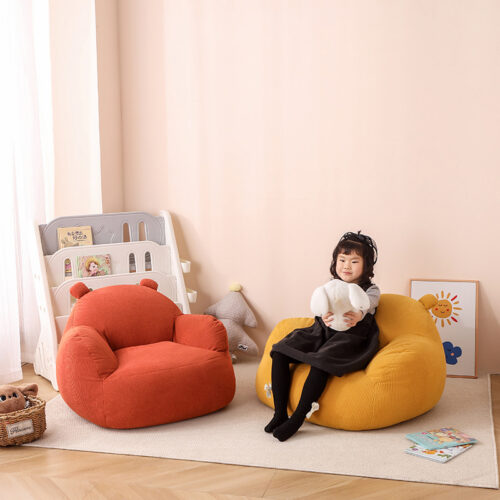
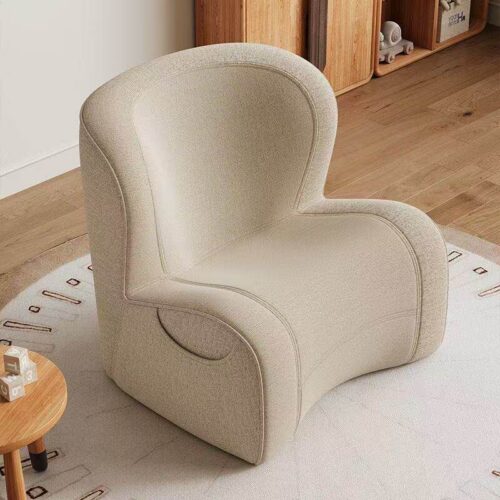
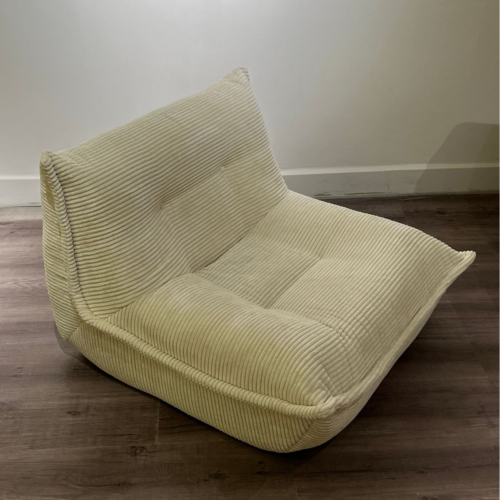
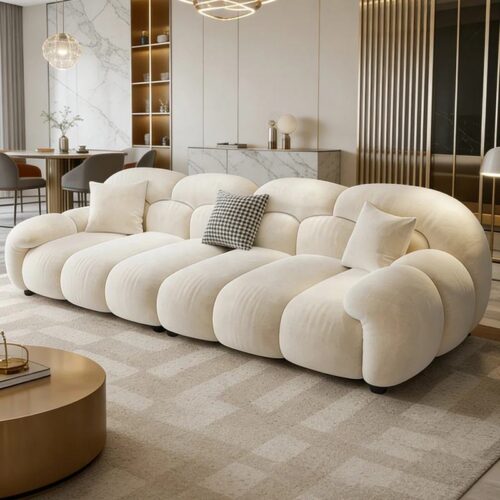
Compressed sofa, also known as roll-pack sofa or vacuum-compressed sofa, refers to a sofa that undergoes vacuum compression technology to reduce its internal foam volume to 12-20% of the original size, enabling highly efficient logistics and transportation. As of 2026, the global compressed sofa market has surpassed $6.8 billion, with a compound annual growth rate (CAGR) of 16.8%, making it the fastest-growing segment in the upholstered furniture industry.
The core advantages of compressed sofas include: 60%-75% reduction in logistics costs, ~80% savings in warehouse space, significantly improved delivery convenience (fits through elevators and narrow doorways), and the “open-and-restore” unboxing experience. These advantages have driven rapid penetration in e-commerce channels, now accounting for 42% of all online sofa sales.
| Indicator | Compressed Sofa | Traditional Sofa |
| Logistics Volume | 12%-20% of original | 100% |
| Shipping Cost Ratio | 8%-12% | 25%-35% |
| Inventory Turnover | 12-18 cycles/year | 4-6 cycles/year |
| E-commerce Suitability | Very High | Moderate |
| Return Rate | 8%-10% | 15%-20% |
- Technical Principles & Compression Process
Compressed sofa technology relies on the unique physical properties of polyurethane foam. The core principle involves vacuum-sealing the sofa in a plastic bag and extracting the internal air, causing the foam to compress to a thin, flat slab. The entire process follows a precise sequence:
2.1 Vacuum Compression Workflow
Step 1: Sofa Assembly & Preparation
The sofa is fully assembled including fabric cover, foam cushions, inner frame (if applicable). All metal and hard components are protected with bubble wrap or foam sheets to prevent damage during compression.
Step 2: Vacuum Bagging
The sofa is placed into a heavy-duty PE/PA composite vacuum bag. The bag is sealed on three sides, with the fourth side left open for the vacuum nozzle. The bag material must have an oxygen barrier layer to maintain the compressed state.
Step 3: Mechanical Compression (Pre-press)
A hydraulic or pneumatic press applies uniform pressure (typically 200-500 kg/m²) to the sofa from above, reducing its thickness to approximately 20-30% of the original height. This step ensures the foam is pre-compacted before vacuum extraction.
Step 4: Vacuum Extraction
Industrial vacuum pumps extract internal air from the bag, creating a negative pressure environment of -0.6 to -0.8 bar. The open-cell foam structure allows air to be expelled through interconnected pores. The vacuum process takes 30-90 seconds depending on sofa size and foam density.
Step 5: Sealing & Packaging
Once the target vacuum level is reached, the remaining bag opening is heat-sealed. The compressed sofa is then rolled or folded into a compact box (typically 80×60×30 cm for a 3-seater sofa), ready for shipping.
Step 6: Unboxing & Recovery
Upon arrival, the consumer cuts open the vacuum bag. Air rushes into the open-cell foam structure, triggering the shape recovery process. High-quality compressed sofa foam achieves ≥90% recovery within 24 hours and full recovery within 48-72 hours.
2.2 Three Core Foam Performance Requirements
| Performance Metric | Compressed Sofa Standard | Testing Standard |
| Recovery Rate (24h) | ≥ 90% (Premium: ≥ 95%) | GB/T 10802-2021 |
| Compression Set | ≤ 8% (Premium: ≤ 5%) | ASTM D3574 B |
| Fatigue Resistance | 80K cycles, loss ≤ 6% | ASTM D3574 I3 |
- Foam Raw Material Classification & Density System
3.1 Foam Density Definition & Standards
Foam density, measured in kg/m³, is the fundamental physical property determining raw material usage, load-bearing capacity, elastic durability, and product lifespan. Industry standards follow ASTM D3574 (USA) and GB/T 10802-2021 (China).
It is critical to distinguish density from ILD (Indentation Load Deflection). Density measures material quantity per unit volume, while ILD measures firmness. High-density foam can be soft (high density + low ILD) or firm (high density + high ILD). The industry faces an issue of “fake high density” — where manufacturers add heavy fillers (CaCO₃/talc powder) to increase density without improving performance. Such foam should be identified by testing recovery rate and compression set.
3.2 Mainstream Density Classification System
Flexible polyurethane foam is classified into four density tiers based on industry standards:
| Tier | Density Range | Typical ILD | Recovery Rate | Compression Set | Lifespan |
| Low Density | 15-25 kg/m³ | 18-35 lbs | 25%-35% | 12%-18% | 1-2 years |
| Medium Density | 25-35 kg/m³ | 24-50 lbs | 35%-45% | 8%-12% | 3-5 years |
| High Density | 35-45 kg/m³ | 30-65 lbs | 45%-55% | 5%-8% | 5-8 years |
| Ultra-high Density | 45-60+ kg/m³ | 35-80+ lbs | 50%-65% | 3%-5% | 8-12 years |
3.3 In-Depth Pros & Cons Analysis of Each Density Tier
◎ Low Density Foam (15-25 kg/m³)
Advantages:
- Lowest manufacturing cost — minimal raw material usage, ideal for budget-tier mass production
- Very soft initial feel, comfortable for temporary seating applications
- Light weight reduces transportation costs; faster vacuum recovery due to higher open-cell ratio
- Easy to cut and process, low tool wear during fabrication
Disadvantages:
- Poor recovery rate (only 25%-35%) — slow shape restoration after prolonged compression
- High compression set (12%-18%) — irreversible deformation occurs after compression cycles
- Extremely low durability — 1-2 year lifespan; visible sagging within 3-6 months of daily use
- Insufficient support — poor ergonomic performance, unsuitable for prolonged sitting
- NOT suitable for compressed sofas — irreversible fiber structure damage occurs during vacuum compression
- Higher VOC emissions — low-density formulations typically use more residual blowing agents
◎ Medium Density Foam (25-35 kg/m³)
Advantages:
- Best cost-performance balance — the most widely used foam type in compressed sofa industry
- Moderate recovery rate (35%-45%) — 85%-95% restoration within 24h after vacuum compression
- Good durability — 3-5 year lifespan; compression set controlled at 8%-12%
- Versatile comfort range (ILD 24-50 lbs) — suits most daily household seating needs
- Consistent production quality — mature foaming process with high batch consistency
- Meets international flammability standards — CA 117 and BS 5852 compliant
Disadvantages:
- Insufficient for premium product lines — support begins to degrade after 2 years of heavy use
- Recovery speed slower than high-density foam — some budget medium-density foams drop below 35% recovery
- Market often mislabels medium-density as high-density — consumers cannot easily distinguish
- May not fully restore when compressed below 12% of original volume — insufficient elastic memory
◎ High Density Foam (35-45 kg/m³)
Advantages:
- Excellent recovery (45%-55%) — 95%-100% restoration within 24h; ideal for compressed sofas
- Outstanding durability — 5-8 year lifespan; support retention over 85% under heavy use
- Very low compression set (5%-8%) — excellent shape retention after repeated compression
- Optimal support-comfort balance — ILD 30-65 lbs covering medium-soft to medium-firm feels
- Stable formulation — allows functional additives (flame retardants, antimicrobial agents)
- Open-cell ratio 90%-95% — ensures efficient air expulsion while maintaining structural strength
Disadvantages:
- 30%-50% higher raw material cost compared to medium-density foam
- Heavier weight increases shipping costs — partially offsets logistic savings from compaction
- Higher processing difficulty — more tool wear, requires more powerful cutting equipment
- Risk of being too firm if ILD is not precisely controlled during formulation
- Requires higher vacuum power during compression — greater internal air flow resistance
◎ Ultra-high Density Foam (45-60+ kg/m³)
Advantages:
- Maximum durability — 8-12+ year lifespan; virtually no permanent deformation (compression set 3%-5%)
- Highest recovery rate (50%-65%) — rapid full restoration after multiple compression cycles
- Superior load-bearing capacity — ideal for medical seating, office chairs, premium contract furniture
- Widest ILD adjustability (35-80+ lbs) — can be formulated from soft to extra firm
- Best environmental performance — pure polyether polyol system, lowest VOC, Greenguard certified
Disadvantages:
- 2-3x raw material cost vs medium-density foam — significantly raises product retail price
- Heaviest weight — may negate volume-based shipping savings for cross-border logistics
- Difficult fabrication — requires high-power cutting tools; low production efficiency
- Risk of insufficient air evacuation during vacuum compression if open-cell ratio is not optimized
- Over-specification for standard comfort sofas — unnecessary cost and resource waste
- Limited supplier availability — longer procurement lead times in most markets
▎Application Suitability Quick Reference
| Foam Type | Compressed Sofa Suitability | Typical Applications |
| Low (15-25) | ❌ Not suitable — irreversible damage | Temporary cushions, pillow filling, packaging |
| Medium (25-35) | ✅ Suitable — best value choice | Compressed sofa main body, daily home sofas, mattresses |
| High (35-45) | ✅ Most recommended — best performance | Premium compressed sofas, hotel projects, high-end furniture |
| Ultra-high (45-60+) | ⚠️ Use as needed — performance may exceed requirements | Medical seating, aviation seats, premium office chairs |
3.4 Special Performance Requirements for Compressed Sofa Foam
Compressed sofas place significantly different demands on foam compared to traditional sofas. Throughout the vacuum compression → transport → unpacking → recovery cycle, foam must satisfy these special performance criteria:
① Open Cell Content ≥90%
Ensures air can be fully expelled during vacuum compression. Closed-cell foams cannot be used for compressed sofas as trapped air prevents flattening. High-density foams require careful cell-structure control.
② Recovery Rate ≥90% within 24 hours
The core quality metric for compressed sofas. Determined by the elastic memory properties of polyether polyol molecular weight and crosslinking density. High-density foam performs better due to tighter molecular chain structure.
③ Compression Set ≤8% (ASTM D3574)
Premium compressed sofas require ≤5%. High compression set means the foam cannot fully recover its original thickness after prolonged vacuum packaging, leading to visible sofa defects after unboxing.
④ Fatigue Resistance
Must pass 80,000-cycle fatigue test with thickness loss ≤6%. Compressed sofas endure continuous compression stress during storage and transport — far more demanding than traditional sofas.
⑤ Antimicrobial & Anti-mold Treatment
Vacuum packaging may promote anaerobic microbial growth. Foam should be treated with antimicrobial additives. This requirement is especially critical for exports to Southeast Asia and other high-humidity regions.
- Compressed Sofa Foam Selection Guide
4.1 Core Selection Metrics
Six key metrics must be evaluated comprehensively for compressed sofa foam selection, rather than pursuing density alone:
① Recovery Rate (24h)
Primary metric. The percentage of original thickness restored within 24 hours of unpacking. Industry standard: ≥90%, premium: ≥95%. This metric directly determines the consumer’s first impression upon opening the package.
② Compression Set (ASTM D3574 B)
50% compression for 22 hours + 30 min recovery. Compressed sofa requirement: ≤8%, premium: ≤5%. Reflects the foam’s ability to maintain elasticity under prolonged compression.
③ Open Cell Content
Must be ≥90%. Insufficient open-cell ratio prevents air evacuation during vacuum compression, leading to incomplete flattening or premature bag rupture. Critical for high-density foams.
④ Fatigue Resistance
80,000-cycle test with thickness loss ≤6%. Compressed sofas endure continuous pressure during warehousing and shipping — significantly more demanding than non-compressed sofas.
⑤ ILD (Indentation Load Deflection)
Determines the feel: compressed sofa seat cushions recommend ILD 30-55 lbs, back cushions 18-30 lbs. Adjust by target market — North America prefers softer (ILD 24-40), Europe medium (ILD 30-50), Asia firmer (ILD 40-60).
⑥ VOC & Environmental Compliance
Export products must comply with REACH (EU), TB 117-2013 (USA), BS 5852 (UK). Vacuum packaging may concentrate VOCs — low-VOC foam is strongly recommended. CertiPUR-US or OEKO-TEX certification preferred.
4.2 Performance Comparison: Density Tiers in Compression Scenarios
| Metric | Low Density | Medium Density | High Density | Ultra-high Density |
| Recovery (24h) | 60-70% ❌ | 85-95% ⚠️ | 95-100% ✅ | 95-100% ✅ |
| Compression Set | 12-18% ❌ | 8-12% ⚠️ | 5-8% ✅ | 3-5% ✅ |
| Fatigue Cycles | <50K ❌ | 50-80K ⚠️ | 100K+ ✅ | 150K+ ✅ |
| Overall Rating | ❌ Not suitable | ✅ Suitable | ⭐⭐⭐ Best choice | ⭐⭐ Use as needed |
4.3 Cost-Performance Balance Strategies
Compressed sofa brands must balance cost and performance. Industry-proven strategies include:
Strategy 1: Layered Construction (Most Recommended)
Use high-density foam (35-45, 3-5cm) as the support base layer, medium-density foam (25-30, 3-5cm) as the comfort top layer. This achieves optimal compression recovery and comfort while controlling cost.
Strategy 2: Unified Medium Density (Best Value)
Use 28-32 kg/m³ medium-density foam throughout the seat. Lowest cost while meeting basic compression requirements. Suitable for budget-oriented products. Compensate for lower density by increasing overall foam thickness (15-20cm compressed to 3-4cm).
Strategy 3: High-Density Premium (High-End Positioning)
Use 38-42 kg/m³ high-density foam for both seat and back, combined with pocket spring support. Recovery rate exceeds 98%. Suitable for premium e-commerce brands and hotel project orders. Retail price positioning: $800-$1,500.
Strategy 4: Specialty Foam Composite (Innovation Route)
Combine high-density foam with viscoelastic (memory) foam or HR (high-resilience) foam. Memory foam provides pressure dispersion, high-density layer ensures support and compression recovery. This approach is growing rapidly in the US and European premium markets.
- Industry Applications & Market Trends
Compressed sofas represent one of the fastest-growing segments in the furniture industry. Foam raw material selection directly impacts product competitiveness and profit margins across different markets.
5.1 E-Commerce Channel Impact on Foam Selection
① Medium-Density Dominance for Value Positioning
Price-sensitive e-commerce consumers favor medium-density foam (25-35 kg/m³) for its controlled cost and adequate performance. Combined with smart thickness design, competitive products can be offered at $150-$400 retail.
② High-Density Brands Capture Premium Tier
Cross-border brands (SONGMICS, VASAGLE, HOMCOM) are adopting high-density foam (35-45) to build quality reputation, supporting $500-$1,000 pricing. The ‘instant recovery’ visual impact has become a core marketing selling point.
③ Tiered Configuration Strategy
Offering the same sofa model with different foam options (Standard/Plus/Premium) creates a price ladder. Typical density progression: seat foam 28→35→42 kg/m³, corresponding to retail $200→$350→$550.
5.2 Regional Market Foam Preferences
| Region | Density Preference | ILD Preference | Price Sensitivity |
| North America | Medium (28-32) | Soft (ILD 24-40) | Medium |
| Europe | Medium-High (30-38) | Medium (ILD 30-50) | Quality-sensitive |
| Southeast Asia | Medium-High (30-40) | Firm (ILD 40-60) | High |
| Middle East / CIS | High (35-45) | Firm (ILD 45-65) | Quality-focused |
5.3 Foam Technology Innovation Directions
① Bio-based Polyol Foams
Replacing petroleum-based polyether polyols with castor oil, soybean oil, and other renewable sources. Reducing carbon footprint by up to 40%. European demand for bio-based foams is growing at 20%+ CAGR.
② Supercritical CO₂ Foaming Technology
Replacing traditional chemical blowing agents with supercritical CO₂. Produces foam with higher open-cell content and more uniform pore distribution, achieving recovery rates above 97%. Penetrating from high-end to mid-range markets.
③ Graphene-Enhanced Foam
Adding trace graphene to improve fatigue resistance and thermal conductivity while maintaining low density. Currently in lab-to-pilot stage, expected commercial availability by 2027-2028.
④ Closed-Loop Recycling Systems
Chemical recycling technology enables PU foam to be depolymerized back into original polyols for re-foaming. EU EPR (Extended Producer Responsibility) regulations are accelerating this transition.
- Conclusions & Recommendations
The compressed sofa industry is undergoing rapid transformation. Based on the technical analysis, market research, and practical experience discussed in this report, we present six key conclusions and strategic recommendations for professionals in the foam and furniture sectors.
6.1 Density Selection Is the Starting Point, Not the Whole Story
Correct understanding, not blind pursuit
Density is the most intuitive indicator of foam quality, but it must be evaluated in conjunction with mechanical properties. A density of 35-42 kg/m³ provides the best balance of recovery and durability for compressed sofas. However, ‘fake high-density’ products (using CaCO₃ or talc fillers to inflate density) must be strictly avoided — they sacrifice rebound and fatigue resistance.
Recommendation:
Specify both density AND mechanical properties (ILD, compression set, recovery rate) in procurement contracts. Require third-party testing reports per ASTM D3574 or GB/T 10802-2021.
6.2 Layered Construction: The Industry Best Practice
High-density base + medium-density comfort layer
Layered foam construction has become the consensus among leading compressed sofa brands. A typical configuration uses 35-45 kg/m³ high-density foam (3-5 cm) as the support base and 25-30 kg/m³ medium-density foam (3-5 cm) as the comfort top. This achieves the optimal balance between compression recovery performance, seating comfort, and cost control.
Recommendation:
Adopt layered construction as the default design for any compressed sofa priced above USD $300. For budget products (under $200), unified medium-density foam can be used as an alternative.
6.3 Open-Cell Ratio & Recovery Rate: More Critical Than Density Alone
Compression performance depends on cell structure
For vacuum-compressed sofas, open-cell content (≥90%) and 24-hour recovery rate (≥95%) are more decisive indicators than raw density. A well-formulated medium-density foam with open-cell content >95% can outperform a high-density foam with poor cell structure in compression applications.
Recommendation:
Prioritize open-cell ratio and recovery rate in foam specifications. Require suppliers to provide scanning electron microscopy (SEM) or airflow test data as part of quality documentation.
6.4 Regional Market Differentiation Strategy
One size does not fit all
The global compressed sofa market exhibits significant regional preferences: North America favors softer feel with medium density (28-32, ILD 24-40), Europe demands higher quality and durability (30-38, ILD 30-50), Southeast Asia prefers firm support (30-40, ILD 40-60), and the Middle East/CIS markets require high-density premium products (35-45, ILD 45-65). Tailoring foam configuration to each target market is essential for success.
Recommendation:
Maintain 2-3 SKU variants with different foam configurations for each key export region. Use the ‘platform + modular foam insert’ design to reduce inventory complexity.
6.5 Environmental Compliance Is No Longer Optional
Regulatory pressure is mounting globally
EU REACH regulations, California TB 117-2013, UK BS 5852, and emerging EPR (Extended Producer Responsibility) frameworks are reshaping foam raw material requirements. Low-VOC, CertiPUR-US, and OEKO-TEX certified foams are becoming baseline requirements for major retailers. Bio-based polyol foams and closed-loop recycling systems are transitioning from differentiators to market access prerequisites.
Recommendation:
Begin transitioning to bio-based or partially bio-based polyol foams. Establish supplier ESG assessment criteria. Prepare for EU Digital Product Passport (DPP) requirements expected by 2028-2030.
6.6 Stay Ahead of Technological Innovation
The innovation cycle is accelerating
Supercritical CO₂ foaming technology, graphene-enhanced foam, and AI-driven foam formulation optimization are poised to reshape the industry within the next 3-5 years. Companies that invest early in these technologies will gain significant competitive advantages in cost, performance, and sustainability.
Recommendation:
Allocate 3-5% of annual foam procurement budget to R&D partnerships with foam manufacturers testing new technologies. Attend industry events such as Polyurethanes Expo and UTECH Europe. Maintain a technology watch list covering supercritical CO₂ foaming, bio-based polyols, and recycling technologies.
Closing Remarks
The compressed sofa market represents a paradigm shift in furniture logistics and consumer experience. Foam raw material selection stands at the center of this transformation — not merely as a cost input, but as the decisive factor defining product quality, brand reputation, and long-term sustainability.
Manufacturers that master the science of foam selection, embrace layered construction methodologies, and proactively adapt to regional preferences and environmental regulations will define the next decade of the global furniture industry. The choice of foam is no longer just a technical decision — it is a strategic one.
This report was prepared to provide industry professionals with a comprehensive technical reference for compressed sofa foam material selection, bridging material science and practical business strategy.